
The execution layer for coordinated global trade.
Circuit 40s structures how shipment work, documents, updates, responsibility, and handoffs move between shippers, platforms, and logistics operators.
Global logistics moves through capable operators. The fragile part is everything between them.
Shipment execution crosses shippers, freight forwarders, customs brokers, warehouses, port agents, dispatchers, drivers, delivery providers, and enterprise platforms.
Each participant may be competent. But operational truth is often scattered across separate systems, messages, documents, spreadsheets, portals, and assumptions.
Operators receive incomplete or outdated context.
Documents arrive late, incorrectly, or in the wrong channel.
Responsibility becomes unclear when a shipment stalls.
Visibility shows the problem, but does not coordinate what happens next.
Execution coordination has to become infrastructure.
Logistics has software for planning, booking, tracking, procurement, ERP, and communication. What is missing is the software-native layer that turns shipment intent into structured execution across independent participants.
Circuit coordinates the operational flow: who needs to act, what information they need, which documents are required, when responsibility transfers, and how exceptions become managed execution states.
Four entry points into one coordinated execution network.
Each product serves a distinct participant and operational function, connected by a shared infrastructure layer and a single execution model.

Shipment continuity for small shippers.
Booking, progress, communication, and confirmation stay connected from first request to final delivery.
Enter C41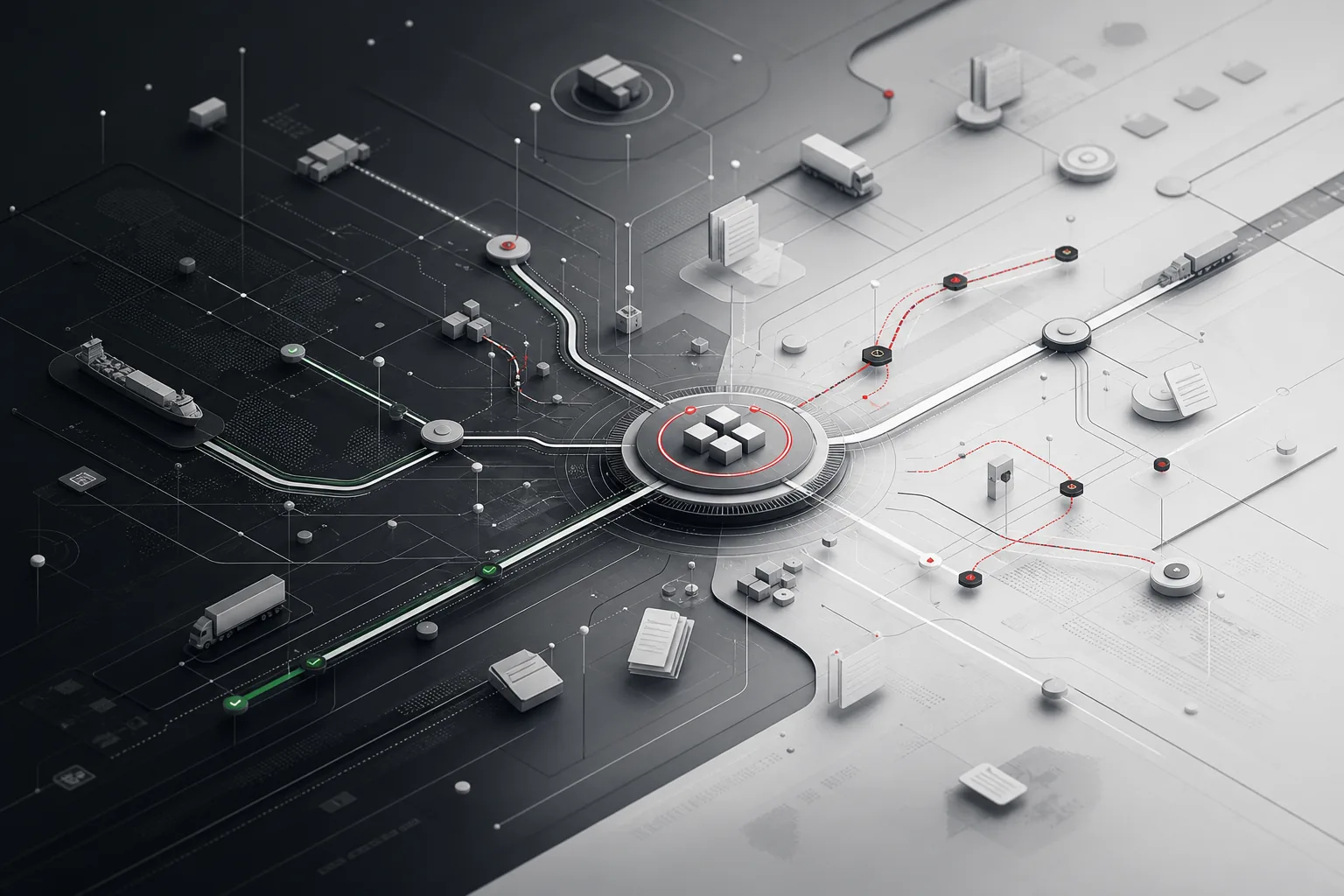
The coordination engine at the center.
Workflow structure, routing logic, assignment, status propagation, and execution coordination.
Enter C42
Embedded execution for enterprise workflows.
Platforms can expose logistics execution without becoming logistics companies.
Enter C43
Role-specific execution for operators.
Scoped work, required inputs, status updates, documents, and exception handling.
Enter C44The next layer of logistics infrastructure is coordination.
Physical infrastructure moves goods. Circuit is building the execution infrastructure that helps independent participants move operational truth with those goods.
Manual execution coordinated through structured software systems.
Progressive automation as workflows become validated and repeatable.
Workflow embedding, operator participation, execution data, coordination logic, and infrastructure dependency.
Global trade needs shared operational infrastructure.
Circuit is working with operators, enterprise shippers, and integration partners to make shipment execution more coordinated, traceable, and operationally coherent.